
A Life Never in Vain
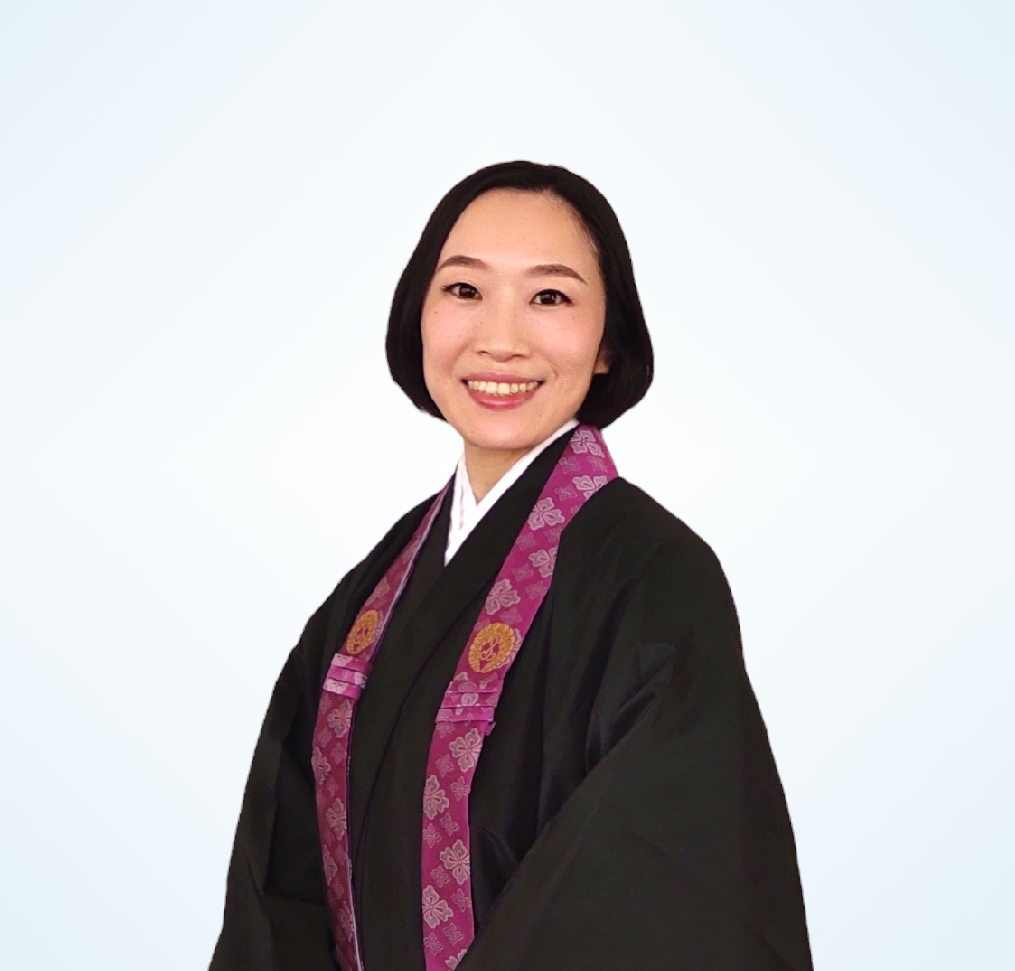
Reverend Yukari Torii
Resident Minister, San Fernando Valley Hongwanji Buddhist Temple
Since my cancer diagnosis at the end of May, I have spent these past two months feeling grateful, day by day, for the meaning in this Wasan hymn by Shinran Shonin.
Of those who encounter the power of the Primal Vow,
Not one passes by in vain;
They are filled with the treasure ocean of virtues,
The defiled waters of their blind passions not separated from it. (CWS, p. 346)
In other words, once we encounter the working of Amida Buddha’s Primal Vow, we no longer spend our life meaninglessly. Amida Buddha’s virtues fill our lives, and even though our human nature keeps us from seeing the truth clearly, we are still being led along the path toward becoming Buddha.
Now, the ‘life’ being talked about here isn’t just our life in this temporary human form. This physical form will end someday. But Shinran Shonin tells us: our life doesn’t simply end with death. Through Amida’s working, it is a life to be born into the Pure Land, a life that becomes a Buddha.
In “White Ashes,” Rennyo Shonin teaches that it would be no wonder at all if someone perfectly well this morning were to become white ashes by evening. Having lost my mother so suddenly, I feel the truth of these words deeply.
In the depths of grief, struggling to accept my mother’s passing, I encountered the Jodo Shinshu teaching. Though I can no longer see her, she became a Buddha, and together with Amida Buddha she continues to nurture and guide me. She is with me always. This teaching has supported me ever since. It showed me that what we call “death” is not truly the end of life.
Now, having been diagnosed with cancer, there are times I find myself thinking about my own death. Death comes to everyone who is born. Rather than turning away from this fact, Shakyamuni Buddha and Shinran Shonin faced this reality directly and sought a path to overcome and find liberation from the deep fear, anxiety, and suffering that surround death.
A colonoscopy led to my diagnosis, and perhaps because I knew so little about the disease, I wasn’t especially shocked at first. I did think a bigger shock might come later, as I came to understand the situation more fully.
At first I thought, simply, that surgery would take care of it. But with each test result, each conversation with my care team, it became clear things weren’t so simple. There was a chance of metastasis, and if so, removing the original tumor would not stop the spread, so surgery would serve no purpose. In that case, I was told, the only option would be lifelong chemotherapy, just to keep the cancer in check.
Chemotherapy began in early July. Alongside a week or two of ongoing low-grade discomfort, sharp, acute side effects come and go. My care team tells me these effects typically grow stronger with each round. There are medications to ease them, but the harder days may add up. I don’t welcome that, but no amount of worrying on my part will make the side effects disappear, or make the cancer go away.
That’s not to say I feel no anxiety. When I first learned I’d need long-term treatment, this is what came to mind right away: I came from Japan, and I’ve only been serving as a Kaikyoshi minister for two years. This whole time, the Sangha, the senior ministers, the Southern District, and the BCA have all been nurturing and helping me, while I’ve given so little back. I also wondered whether I could manage in a healthcare system so different from Japan’s. There’s no end to the small worries, but at their root, most of my stress has come from practical matters, not from my physical condition itself.
Still, toward the diagnosis itself, I feel no fear, no worry at all. I looked into what my cancer stage means, and came across the survival statistics that go with it. Those numbers are only probabilities. There’s no telling whether they apply to me. Still, my own death has suddenly become very real. But am I shocked by that? Afraid? Not at all.
Why not? Because, gratefully, I’m able to feel that whatever happens, I can entrust it all to Amida Buddha. And there’s warmth, too, in hearing my mother will be there to welcome me in the Pure Land.
Does that mean I have no attachment left to this world? No, I do. In the Tannishō, it is said that this world of suffering still feels like home to us, and we do not seek out the Pure Land of peace simply because our human nature runs so deep. There is still so much I want to do in this life. These attachments, born of our human nature, never fully disappear as long as we carry a human body.
As for being apart from the people I love, my husband and my family in Japan, here is how I think of it. There’s a poem: “If you ever find yourself missing me, please say Namo Amida Butsu.” I’ll be in the voice of the Nembutsu you say. I’ll become Buddha, and return to you. Then we’ll be together, always.
Though I can no longer see my mother with my own eyes, she and I are both held in Amida Buddha’s great embrace, so whenever I say that Name, “Namo Amida Butsu,” I’m able to meet her again. Every time I say it, I feel our connection.
For now, there are times we cannot be together even when we want to be. As things stand now, I cannot see my beloved sisters in Japan. With the people I love, our feelings do not always align. We argue sometimes too. But once I become a Buddha, I’ll be able to live that same life together with the people I love. This is the teaching of Jodo Shinshu, the teaching of the Nembutsu, that I’ve received, and I hope with all my heart that it stays close to the hearts of the people I love.
Because I am held in Amida Buddha’s embrace, whatever happens, it will be okay. Whenever and however this life ends, I will be born in the Pure Land and made to become a Buddha. Becoming Buddha through Amida Buddha doesn’t mean being separated from the people I love. It means I can keep thinking of them, caring for them, and staying with them always, not only the people dear to me, but every form of life. I become a Buddha who reaches out to nurture and guide them all.
Entrusting my life to Amida Buddha, held in the peace of knowing I will be made to become a Buddha, I feel myself carried through each day calmly. Jodo Shinshu isn’t only a teaching about what comes after death. This same peace supports my heart, right now, living each day in this world.
It isn’t because I’m mentally strong, or because I’ve reached some kind of enlightenment, that I can feel this way. It’s because I have been given the opportunity to hear, again and again, that Amida Buddha holds me always. Regardless of my own effort or will, the power of the Primal Vow, that is, Amida Buddha’s heart and working, has reached me and soaked into me. That is the only reason I can walk forward through a life that, no matter what happens, is never empty. I feel so grateful, and so full of joy, that Amida Buddha established this Vow for my sake, and that I have been able to encounter this teaching.