
Surrounded by Buddhas: What Our Nenju Teaches Us
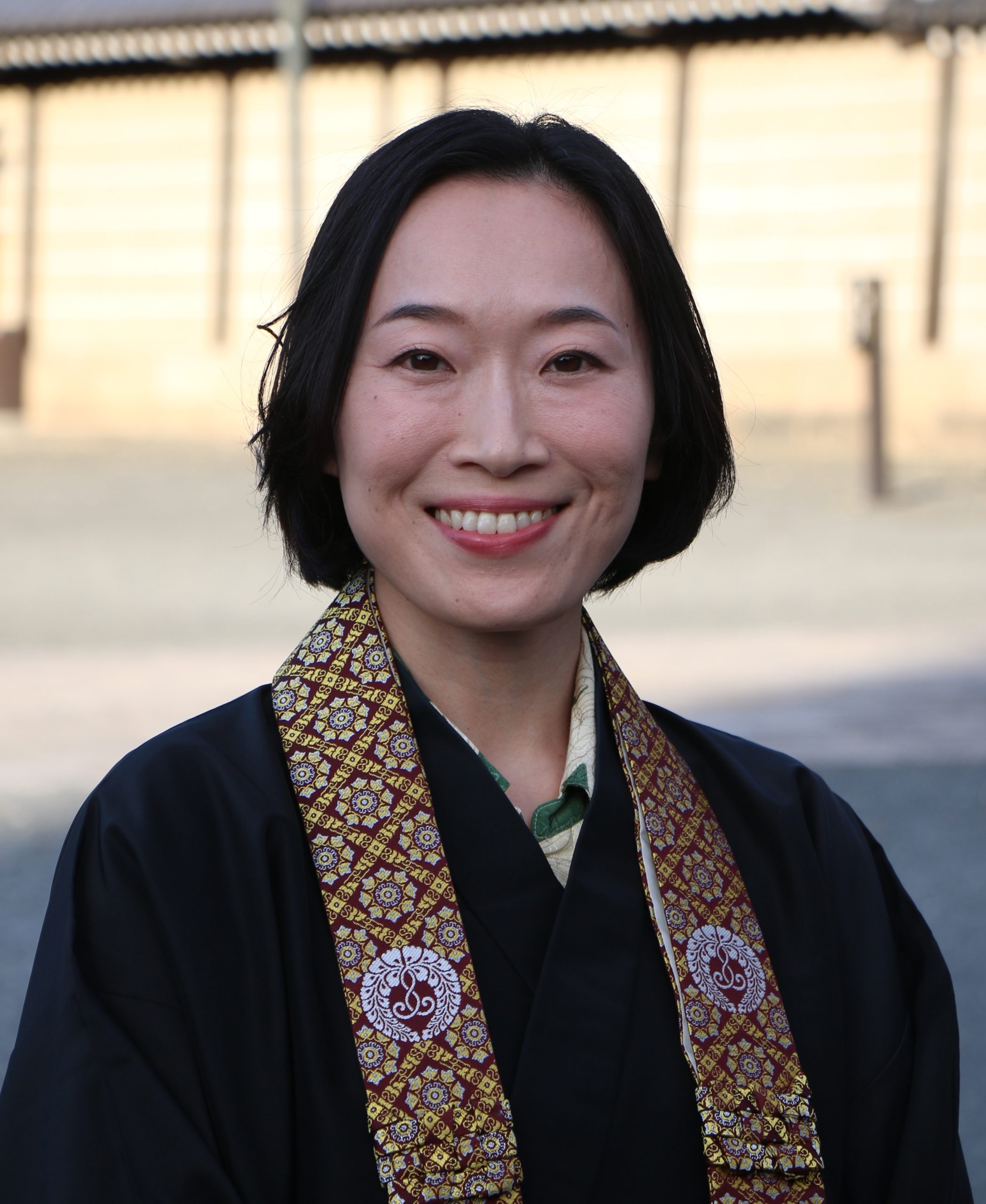
Reverend Yukari Torii
Resident Minister, San Fernando Valley Hongwanji Buddhist Temple
Nenju is an item we can’t do without when we come to the temple. Through the nenju, I’d like to share what I’ve come to appreciate in our teachings.
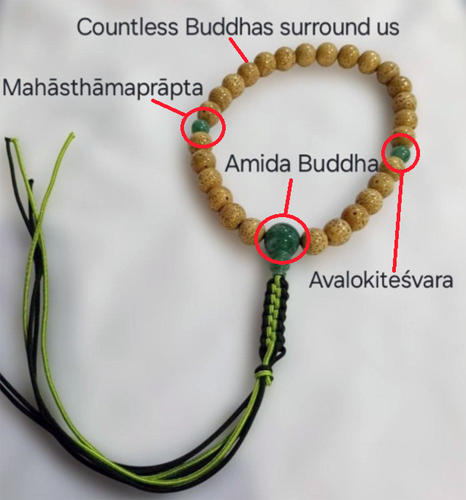
I feel that the shape of the nenju itself lets us savor the teachings of Jodo Shinshu. On a typical Jodo Shinshu nenju, three beads on the loop are a different size from the rest. My dharma teacher taught me that the one noticeably larger bead represents Amida Buddha. The two beads on either side of it represent Mahāsthāmaprāpta and Avalokiteśvara. These two are said to represent the virtues of Amida Buddha. Mahāsthāmaprāpta represents limitless wisdom, and Avalokiteśvara represents boundless compassion.
Nenju is an item we can’t do without when we come to the temple. Through the nenju, I’d like to share what I’ve come to appreciate in our teachings.
I feel that the shape of the nenju itself lets us savor the teachings of Jodo Shinshu. On a typical Jodo Shinshu nenju, three beads on the loop are a different size from the rest. My dharma teacher taught me that the one noticeably larger bead represents Amida Buddha. The two beads on either side of it represent Mahāsthāmaprāpta and Avalokiteśvara. These two are said to represent the virtues of Amida Buddha. Mahāsthāmaprāpta represents limitless wisdom, and Avalokiteśvara represents boundless compassion.
So what about all the other beads? To me, they represent all the Buddhas and bodhisattvas who guide me to encounter Amida Buddha’s wish.
Amida Buddha is tirelessly working to free every living being from this world of delusion. Through that working, those who have already been born into the Pure Land are made into Buddhas, and are then moved to guide the loved ones they left behind in this world along that very same path toward Buddhahood. Along with Amida Buddha, all those Buddhas, including our loved ones who have gone before us, wish to free us from this world of delusion and bring us true peace of mind.
“You and I are both held in Amida Buddha’s embrace. Please, hear and accept Amida Buddha’s wish for you. And please walk the same path I once walked, the path that leads to becoming a Buddha.” This is the wish that our Loved Ones, now Buddhas themselves, hold for us.
Shinran Shonin wrote that when we hear and sincerely accept Amida Buddha’s wish for us and say Namo Amida Butsu, countless Buddhas throughout every world surround us, and joyfully protect us. Here is the Wasan hymn, that he composed:
When we say “Namo-amida-butsu,”
The countless Buddhas throughout the ten quarters,
Surrounding us a hundredfold, a thousandfold,
Rejoice in and protect us. (CWS, p. 355)
This Wasan teaches us that whether we’re happy, sad, or going through a hard time, we are never alone. The Buddhas are always walking beside us through life, delighted that we have heard and accepted Amida Buddha’s wish.
I feel this teaching is expressed exactly in the nenju itself. When we put our palms together in front of the Buddha, we slip our hands through the nenju and say Namo Amida Butsu. When I pass my hands through the nenju, I feel that the Buddhas, led by the large bead representing Amida Buddha, are surrounding me and walking with me through life.
These beads are all strung together on a single thread, and I think of this thread as representing the Buddha’s teachings, in other words, the sutras. We chant sutras, and the Sanskrit word “sutra” originally means “thread.” Thread holds an important meaning in religions that originated in ancient India, Buddhism included. Simply put, we could say the thread represents what anchors my life.
When the thread breaks, the beads scatter and fall apart. It’s because Amida Buddha, at the center, and all the Buddhas surround me, support me, and guide me, that I have something to anchor my life to, day after day.
By passing my hands through the nenju, I can feel that I have been living my life wished for by the Buddhas all along. And that feels truly precious to me.
When we pass our hands through the nenju, our palms naturally come together. And as I feel how Amida Buddha and all the Buddhas think of me, wish for me, and support me, the words come out of my mouth on their own: “Thank you, Namo Amida Butsu.”
Whenever you come before the Buddha, whether at the temple or at your home altar, I hope you’ll pass your hands through your nenju, put your palms together, and say the nembutsu while feeling that you are wished for and supported by the Buddhas.
Rennyo Shonin, the eighth head priest of Jodo Shinshu, said that coming before Amida Buddha without your nenju is like grabbing Amida Buddha with your bare hands. In other words, it is extremely disrespectful. One of my teachers compared this to showing up to meet Queen Elizabeth without any clothes on. What do you think? None of us could bring ourselves to do that, right?
If you forget your nenju when you come to the temple, we have nenju to borrow in the Hondo lobby, so please feel free to use them. (Please don’t forget to return it on your way out!)
Namo Amida Butsu
Rev. Yukari Torii