
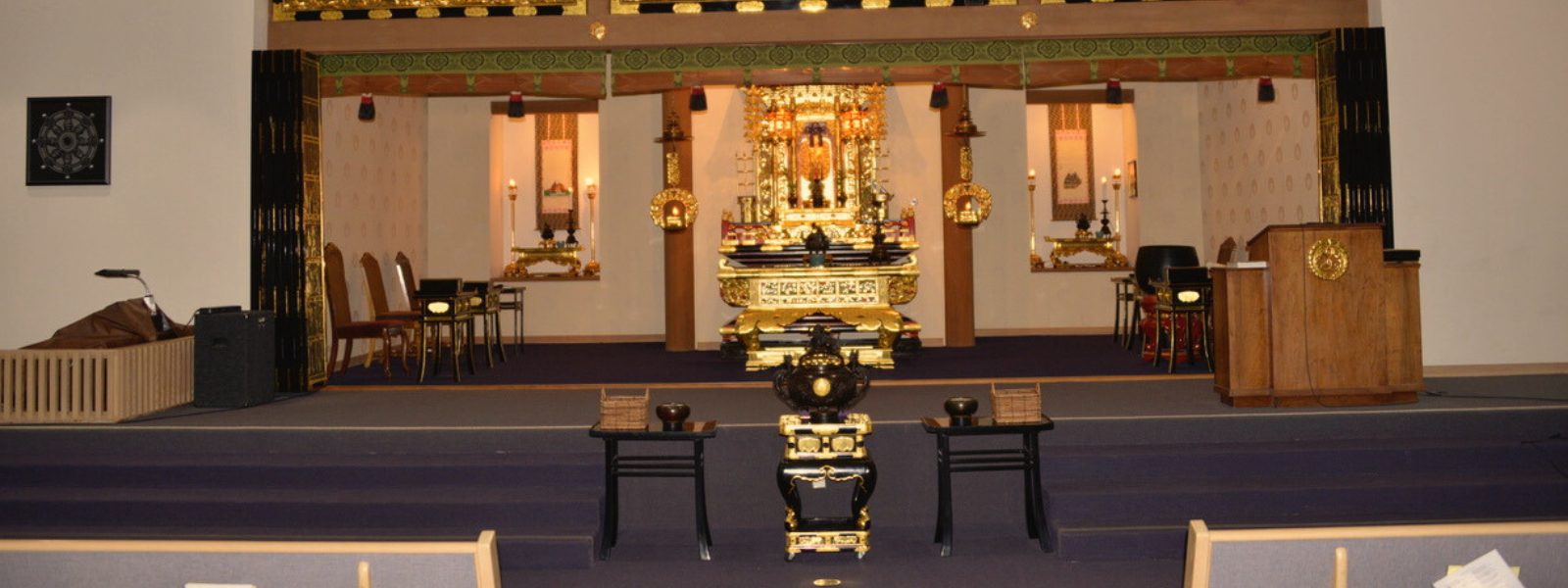
Amida Buddha’s Vow for Me
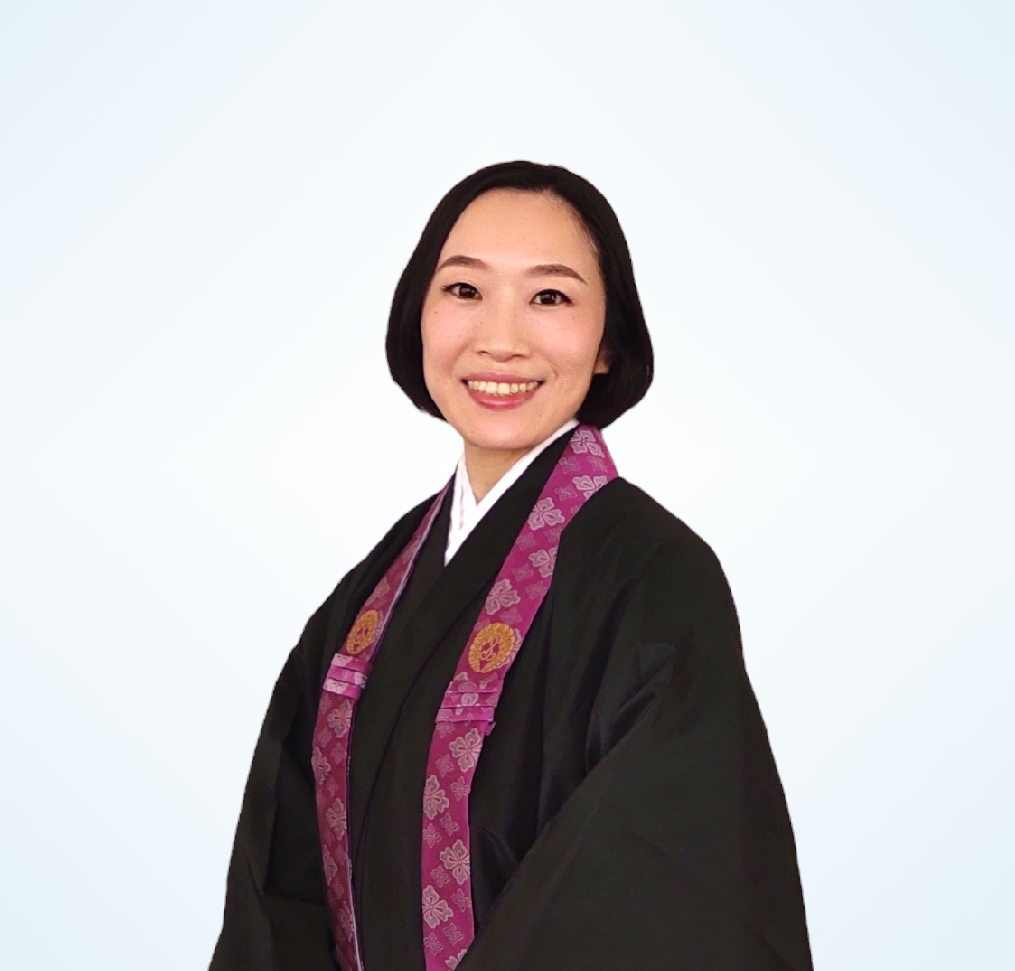
Reverend Yukari Torii
Resident Minister, San Fernando Valley Hongwanji Buddhist Temple
In preparation for our Eitaikyo service in November, I reread the 90th and 100th anniversary booklets to review our temple’s history. I noticed something that touched me deeply: when our temple became independent from Nishi Betsuin, it changed its official name from “SFV Buddhist Church” to “SFV Hongwanji Buddhist Temple.”
I believe that behind the decision to deliberately call their temple “Hongwanji” was a profound awareness among our pioneers—an awareness filled with joy, knowing they were embraced by Amida Buddha, wished for by Amida Buddha. I also think there must have been an earnest wish among these pioneers that their children and grandchildren would hear this vow of Amida Buddha. The pioneers who came from Japan lived lives sustained by the teaching of Namo Amida Butsu. That’s why they established this temple as a place where everyone could share this teaching together, wishing for future generations to also live with this teaching as a foundation for their hearts.
Tracing this wish back to its very origin, it’s Amida Buddha who made a vow for us and continues to wish for us and work toward fulfilling that vow, saying to each of us, “Please entrust yourselves to me. Please encounter my vow and its working that will guide you to ultimate peace.” Within that working, Śākyamuni Buddha expounded Amida’s vow for us, and Shinran Shonin wished for us to encounter the Nembutsu. Through the ages, carried by the wishes of many predecessors, we have actually been able to encounter that vow.
In the Sutra of Immeasurable Life (the Larger Sutra), the scripture Shinran Shonin treasured most, it’s written that Amida Buddha made forty-eight vows. The eighteenth is what we call the Primal Vow. In Japanese, we call it “Hongwan” (本願). “Hongwan” refers to this Primal Vow, and “ji” means temple. The name of our temple means “Temple of Amida’s Primal Vow.”
In Jodo Shinshu, our practice is to listen to and receive the heart of Amida Buddha who made this Primal Vow. Listening to the teaching means understanding the deep meaning—why and how the vow arose, and how it relates to us.
Put simply: When Amida Buddha looked at us with eyes of perfect wisdom, Buddha empathized so deeply with our suffering and sorrow that Buddha’s great compassionate heart wanted to lift us out of that state. Out of this profound empathy, Buddha took action.
In Buddhism, “compassion” means that buddhas and bodhisattvas feel our suffering and sorrow as their own pain, remove them, and bring us ease—ultimately, perfect peace.
In the Tannisho, Shinran Shonin’s disciple Yuien wrote that Shinran often spoke these words: “When I consider deeply the Vow of Amida, which arose from five kalpas of profound thought, I realize that it was entirely for the sake of Shinran myself alone! When I think about it, I am someone burdened with such deep karma that Amida had to make this Vow to reach me. How humbling and grateful I am for this Primal Vow, through which Amida determined to guide me to awakening.”
Amida Buddha’s vow and working are unconditional and universal, reaching every single being. Yet Shinran Shonin receives this as “it was entirely for the sake of Shinran myself alone!”
Before encountering the teaching of Namo Amida Butsu, Shinran Shonin had devoted twenty years to practice, but realized he couldn’t accomplish the level of practice needed to reach enlightenment. The afflictions within him would not disappear, and he was in despair. Through his teacher Honen Shonin, Shinran encountered Amida Buddha’s vow.
Shinran came to understand: Amida saw his causes and conditions, saw the afflictions and sufferings he carried, and Amida’s heart ached for him. For Shinran’s sake, Amida made this vow and took action. How grateful, how humbling this is!
Each person’s causes and conditions are different. Therefore, each person’s suffering and sorrow are different. With perfect wisdom and compassion, Amida Buddha thought deeply about what each person needs to reach ultimate peace, and prepared it for them. According to the Larger Sutra, Dharmakara Bodhisattva—before attaining enlightenment as Amida Buddha—held a passionate wish to bring liberation to all beings. To fulfill this wish, he wholeheartedly devoted himself to practice. The fruits of that practice are being offered to us as “Namo Amida Butsu,” because this is what is needed for me to gain spiritual liberation and become a buddha.
I’d like to share an experience where I felt I glimpsed a small part of this heart of the Buddha. As you know, about a year and a half ago, I moved here from Japan with my husband Kuni. When we walked into our apartment, I was amazed. Everything was already there so we could live comfortably from the moment we arrived—literally everything. A very comfortable, warm living space had been prepared for us.
The crowning touch was this orange cat stuffed animal. I had left my beloved orange cat in Japan because he’s not young anymore and very sensitive. When Linnae learned I’d had a cat, she got this little guy for me. From large furniture to dishes, tea and snacks—various pieces came together beautifully to welcome us. Everyone in the sangha thought about what we would need, donated items, and prepared this warm space. Linnae got this orange kitty to ease my loneliness.
Over this past year and a half, we’ve been taken out for fun, invited to homes, taken out for meals, so many times. You all thought about Kuni and me, starting a new life far from our home country, and wanted to make sure we didn’t have a hard time, didn’t feel lonely. You thought about what would make us happy and acted on that.
Isn’t the way you’ve thought about me and acted toward me similar in nature to Amida Buddha’s vow for me — empathizing with my suffering and sorrow, wanting to lift me out of that state and bring peace to my heart? Please know I’m not saying I’m suffering here, not at all! We’re very happy here!
Of course, there’s no perfect analogy that can fully express a buddha who possesses perfect wisdom and immeasurable compassion. Amida Buddha and “Namo Amida Butsu” are workings beyond conceivability and beyond our words. Also, Buddha sees all living beings equally and compassionately without discrimination. While we ordinary beings might feel a little compassion for people we care about, we cannot feel compassion equally toward all living beings as Buddha does. Still, if we take just a small slice of the Buddha’s heart and think about it, we might be able to feel it in our daily lives. That’s what I’ve tried to do today.
I hope you’ve gotten a sense of the intention behind Amida Buddha’s Primal Vow, the vow made for each one of us. Every time we see the name of our temple, SFV Hongwanji, may we reflect on how Amida Buddha’s “Hongwan” established a firm foundation in the lives of this temple’s pioneers, guiding them to live with perseverance, resilience, and gratitude. And let’s hold in our hearts the wish our pioneers expressed for us through the name of our temple, as we walk the path of Nembutsu together. Namo Amida Butsu.