
Finding Relief in Amida’s Ship
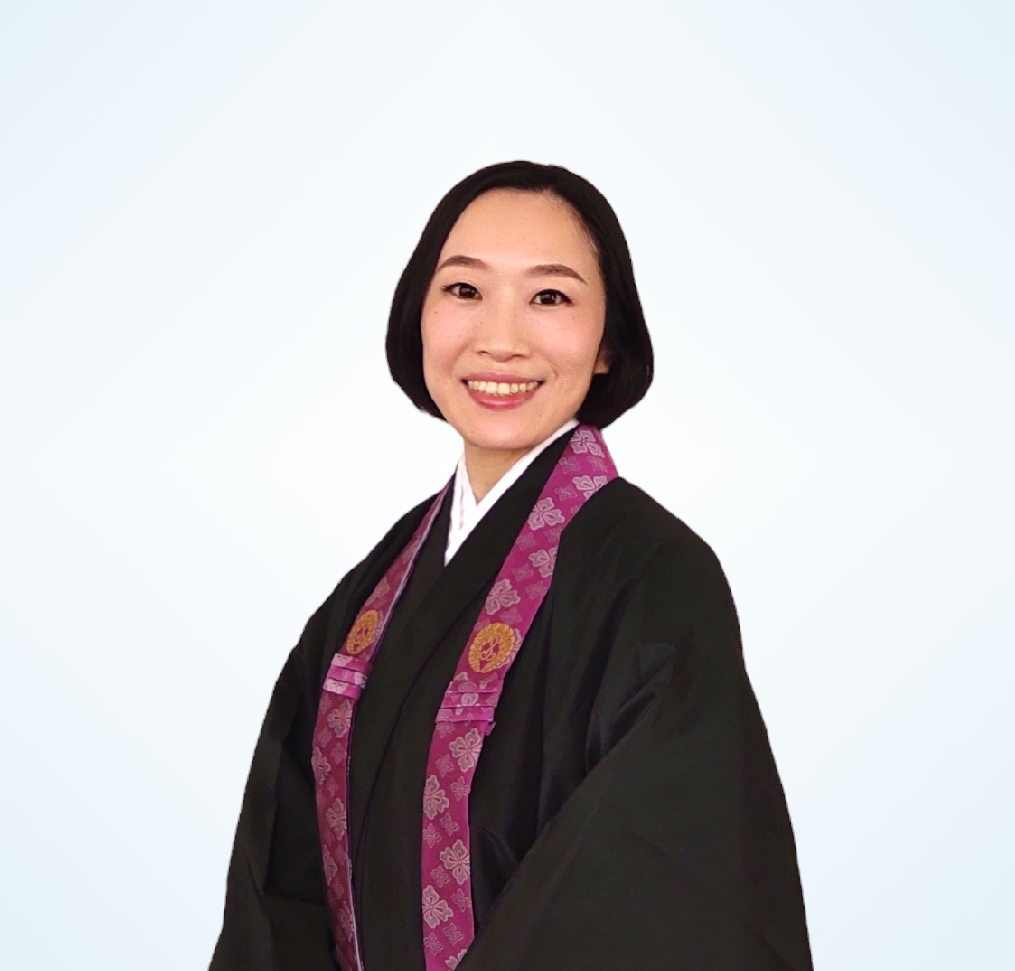
Reverend Yukari Torii
Resident Minister, San Fernando Valley Hongwanji Buddhist Temple
In May, Jodo Shinshu temples commemorate the birth of Shinran Shonin with the Gotan-e service. Our temple held the service the second weekend, followed by a three-temple seminar that was well attended. It’s thanks to Shinran Shonin’s birth that we are able to encounter the Nembutsu teaching and live our lives with a sense of relief by relying on it. The Gotan-e service is our way of expressing gratitude for this.
Shinran Shonin was born on May 21, 1173. Looking back at his life, he entered monastic life at the young—actually, I should say tender—age of 9. For the next 20 years, he engaged in rigorous practices to attain enlightenment and free himself from the world of delusion and suffering. However, despite strictly following rules and precepts and enduring harsh discipline, he continued to suffer, unable to free himself from his anguish. Shinran Shonin came to understand through personal experience that as long as we possess human bodies, we cannot avoid struggling with the afflictions inherent to being human.
In Shinran Shonin’s writings, we see him deeply examining himself, showing his true nature without concealment or pretense. He recognized himself as an ordinary being and said that he was filled with the most fundamental afflictions—the root sources of delusion that prevent us from accepting things as they are. He admitted that he had many desires, and that feelings of anger, irritation, jealousy, and envy arose endlessly within him and would not stop or disappear until the very moment his life ended.
From his youth as a practicing monk through his later years, Shinran Shonin confronted his suffering and troubles throughout his life, hiding nothing. While confident that he had encountered the true teaching, he frankly acknowledged his ongoing struggles with suffering. This wasn’t because Shinran was a pessimistic person. He continued to tell people that Amida Buddha was working for those who, like himself, carried such burdens of suffering.
As such, Shinran Shonin composed this Wasan poem to express the joy of encountering the true dharma:
The ocean of birth-and-death has no shore,
We who have long been sinking in its depths—
Amida’s Vow, like a great ship
Will surely carry us across. (Translation by myself. Official translation: CWS I, p. 363)
「生死の苦海ほとりなし ひさしくしづめるわれらをば 弥陀弘誓の舟のみぞ のせてかならず渡しける」
To translate this more simply: “We live in a world of suffering that is endless like the ocean. Amida Buddha’s ship of the Primal Vow will surely carry us, who have been sinking in this ocean of suffering since the distant past, to the other shore.” In this poem, the metaphor of a ship is used to describe Amida Buddha’s compassionate working that liberates us from the world of suffering and carries us to the other shore, the Pure Land. We are often compared to stones. What happens when you put a stone in water? Regardless of various shapes and sizes, basically, stones can only sink. And our way of life is compared to living in suffering that is endless, like a boundless ocean.
But when you hear this, don’t you think, “Wait a minute, life isn’t just suffering—there are fun times too!” I’d like to share a little story about a “fun” vacation. My husband Kuni and I went on a cruise at the end of March, departing from New Orleans and touring the Yucatan Peninsula. This sounds like it’s going to be nothing but a fun story, right?
Have any of you been on a cruise? Some people might board just to enjoy the cruise experience itself. There’s plenty of entertainment, food and drinks are provided, and of course, the time on the ship was enjoyable. Plus, they take you to destinations—isn’t that the ultimate way to travel? Just by relaxing on the ship, we were able to go to Mexico, which we had originally considered visiting, and I personally was able to fulfill my long-held dream of seeing Mayan ruins since elementary school. Literally, on a cruise, if you just lie down, they will take you to ports and destinations. Kuni and I were talking about how whoever came up with the idea of cruise travel was a real genius.
I’m talking about a “fun” vacation, but let’s think about “suffering” for a moment. What exactly is suffering for us? Even if I’m not in such a situation now, I might experience suffering related to aging, illness, or separation from loved ones in the future. Some of you might be experiencing these things right now. But suffering isn’t limited to just these major life changes. There are plenty of irritations in everyday life. When I think about the irritability I feel daily, it truly “never stops and never disappears.” During our trip, I actually felt irritated many times by the differences between Kuni and me. Of course, we had many more enjoyable moments than irritating ones. But here’s what I mean:
We have different food preferences, so at home we basically eat completely different things. When we eat out, he usually prioritizes what I want to eat, but that doesn’t fill his stomach. So I end up feeling guilty. On the other hand, if I let Kuni choose, it’s nothing but carbs, which I don’t enjoy. He loves carbohydrates, especially rice.
We went to a restaurant at one of the Mexican ports. When I eat out, especially in foreign countries, I order not just the recommended dishes but also the most unfamiliar things on the menu. Sure, this sometimes leads to disappointment, but I want to try foods I can only eat there. But at that Mexican restaurant, when I let Kuni choose what he wanted, guess what he ordered? White rice! Among all those exotic menu items—rice?! I was surprised internally, but I didn’t say anything because I had chosen several other dishes, and I wanted Kuni to eat what he was interested in. By the way, he said that rice was incredibly delicious—among the best things he ate during the trip—so if he was that satisfied, I’m happy too.
There’s more. Kuni doesn’t drink much alcohol—just a few beers at most. I drink a lot, and unless I’m feeling sick, I don’t get drunk easily. Also, when Kuni eats and gets full, he gets sleepy and falls asleep. On the cruise, we had dinner with drinks every night. I wanted to drink more, and there were attractions on the cruise after dinner, but Kuni couldn’t fight his sleepiness and would fall asleep. I could go drinking alone, but since we came on this trip together,
I wanted to go with Kuni.
So by now, you can imagine how irritated I got. Again, of course the trip with Kuni was fun overall. But these minor things—aren’t these kinds of irritabilities part of everyday life for many people? These are so-called blind passions. And I think these small irritabilities arising from our differences can sometimes develop into larger issues, such as more serious anger and hatred. I think this applies not just to interpersonal issues.
These small sufferings or irritabilities never end. I might exercise some self-control when I feel like it, but basically, I think in ways that suit me, speak accordingly, and try to manipulate situations to fulfill my desires. However, when I try to make the world conform to my preferences, I face the reality that things don’t work that way, and this gap causes my suffering. As Shinran Shonin said, until the very moment my life ends, that irritation will never stop or disappear.
Because the world doesn’t go according to our wishes, our lives are compared to living in a world of endless suffering like the ocean. And my existence is compared to a stone sinking in the ocean of suffering.
Think about the characteristics of a stone. No matter how much a stone struggles, it cannot float on water. No matter how hard a stone tries, it remains a stone. No matter how hard I try, I am a stone sinking with my blind passions. So how can a stone float? The only way is to board a ship. By being placed on a ship, a stone can float on the sea while remaining a stone, and reach its destination. That destination is the Pure Land.
Without encountering the Buddha-Dharma, we would simply be born, die, and repeat the cycle of delusion without knowing our destination. With the characteristics of ordinary beings who can only live in suffering and delusion, we have been unable to escape this cycle of suffering from the eternal past to the present, and it will likely remain impossible in the future. Amida Buddha’s compassion works to remove us from this cycle and bring us to a state of ultimate peace of mind, called nirvana.
Bringing us to the state of nirvana is described as “crossing to the Pure Land” or “being taken to the Pure Land.” Upon reaching the Pure Land, we simultaneously become Buddhas. All of this happens through the working of Amida Buddha’s compassionate Primal Vow.
The ocean of birth-and-death has no shore,
We who have long been sinking in its depths—
Amida’s Vow, like a great ship,
Will surely carry us across.
In this poem, Shinran Shonin teaches us that if we are placed on the “ship” of Amida Buddha’s Primal Vow, even we ordinary beings, like stones that can only sink, can cross to the other shore—the Pure Land. Amida Buddha is not a Buddha who tells stones to try hard and float on their own. We do not reach the world of enlightenment by becoming holy beings.
This poem expresses how we, who remain ordinary beings until the end of our lives, will cross to the world of enlightenment while still being our ordinary selves. The ship metaphor shows that our birth in the Pure Land doesn’t depend on our own efforts but comes entirely through the joyful working of Amida Buddha’s Primal Vow.
Kuni and I went on this cruise vacation. Just by relaxing on the ship, drinking, using the jacuzzi, we were able to visit the Yucatan Peninsula with its Mayan ruins that I’d wanted to see.
If we had tried to arrange everything ourselves to get to the Mayan ruins, how difficult would that have been? Actually, we had initially considered a trip to Mexico but gave up because there were too many things to consider, including safety. On the cruise ship, I noticed people of various races, ages, and languages. I also saw people with disabilities. But once everyone boarded the ship, we were all transported to our destination without discrimination. Even on the ship, there was “life” just like on land, and our six-day cruise might be a miniature version of life itself. In fact, I saw couples arguing and people crying. But those people, and even I who was irritated at Kuni for getting sleepy right after eating, were all equally carried to our destination no matter what happened.
When we are placed on the “ship” of Amida Buddha’s Primal Vow, we who can only be ordinary beings until the end of our lives are allowed to cross to the world of enlightenment while remaining ordinary beings. Without Shinran Shonin’s existence, many of us would never have realized this truth. Until the end of our human lives, we would have continued to suffer, irritated by realities that don’t match our preferences, struggling to float in water only to sink.
For us, the Nembutsu is our ticket for the ship. By receiving the ticket prepared by Amida Buddha, we are already placed on the ship and are on our journey to the Pure Land. This means we are already embraced by Amida Buddha. Even without my doing anything on my own, I will be taken to the Pure Land.
As followers of the Nembutsu teachings, our way of life is to simply live each day as it comes and as we are, and to do what we do, with a sense of relief and gratitude. Listening to Shinran’s teachings leads us to realize this truth. The Gotan-e is an opportunity to express our gratitude to Shinran Shonin, who brought us the true teaching in this world where suffering never ends. Namo Amida Butsu.
Gassho,
Rev. Yukari Torii