
Living Without Passing by in Vain
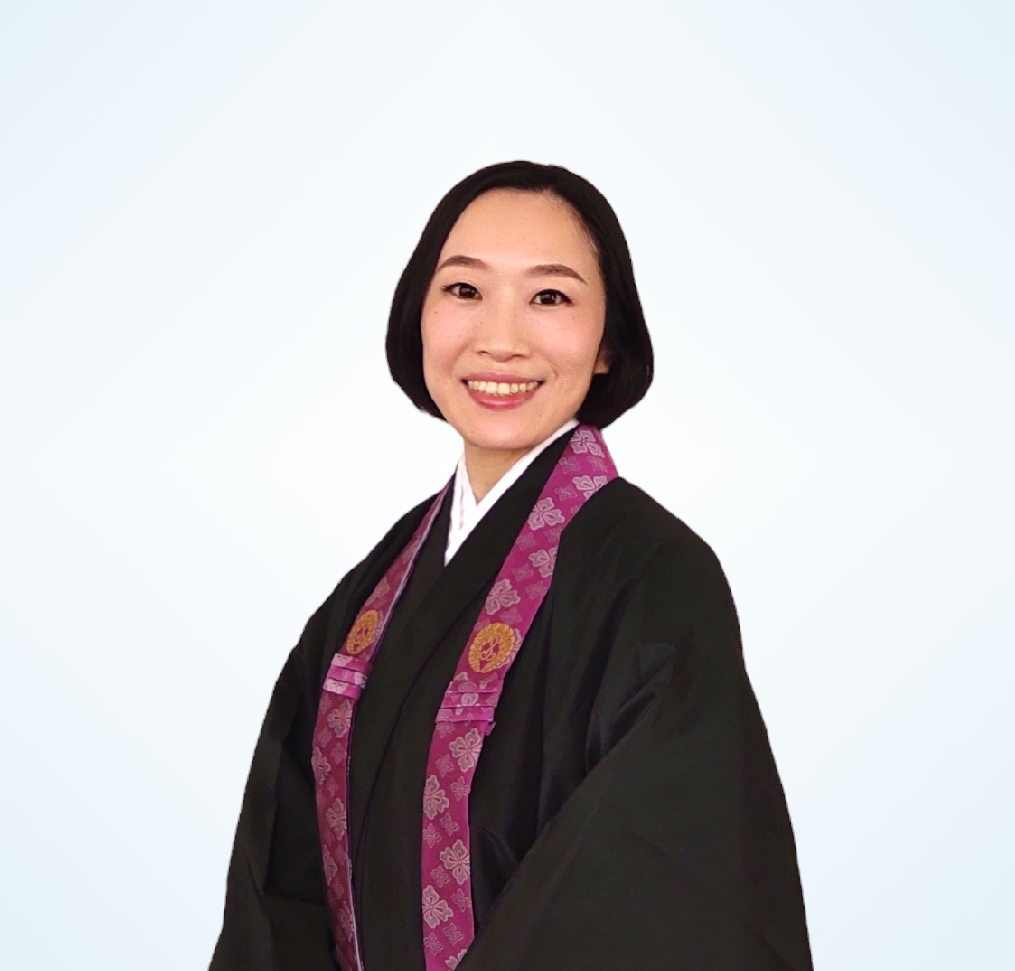
Reverend Yukari Torii
Resident Minister, San Fernando Valley Hongwanji Buddhist Temple
I’ve been introducing Shinran Shonin’s Wasan poems for Closing Meditation during our Sunday Services. Among the more than 500 wasan composed by Shinran Shonin, I find particularly meaningful one that is always chanted at Jodo Shinshu funerals in Japan:
Of those who encounter the power of the Primal Vow,
Not one passes by in vain;
They are filled with the treasure ocean of virtues,
The defiled waters of their blind passions not separated from it. (CWS, Vol. 1, p. 364)
本願力にあひぬれば むなしくすぐるひとぞなき
功徳の宝海みちみちて 煩悩の濁水へだてなし
We could rephrase this official BCA translation like this: When we encounter the working of Amida Buddha’s Primal Vow, we no longer spend our time meaninglessly. Amida Buddha’s virtues fill our lives, and even though our human nature keeps us from seeing the truth clearly, we’re still able to walk the path toward becoming Buddha. Every time I come across these words, I’m reminded of my own encounter with Jodo Shinshu teachings and how they’ve supported me ever since.
What does it mean to spend time “in vain?” Sure, mindlessly scrolling through your phone and suddenly realizing three hours have passed might feel like wasted time. I’m guilty of this too, especially during sale seasons, when a few hours can easily vanish into the shopping black hole. But that’s not what Shinran Shonin is talking about here. He’s referring to living our lives without awareness of Ultimate Truth and Ultimate Reality, continuing on while our blind passions prevent us from seeing these deeper truths.
I first encountered Jodo Shinshu when I lost my mother. The Jodo Shinshu understanding of life and death helped heal my grief. I believe this is at the heart of Jodo Shinshu and a reason to continue listening to the Buddha Dharma.
My mother suddenly collapsed from a stroke one day and passed away two weeks later. It happened so suddenly that I wasn’t prepared at all. At that time, I was living away from home for college, so I hadn’t been spending much time with her. I realized I had never really done anything special for her; if anything, I had only caused her worry. Along with loneliness and sadness, I was filled with regret and all kinds of negative emotions.
But then, one of my mom’s closest friends said something that completely turned my worldview upside down. She said, “Your mom was born in the Pure Land.” Until then, I wasn’t familiar with Jodo Shinshu and had no idea what these teachings were about. But I was certain of one thing: if my mother was born in the Pure Land, it meant she hadn’t just disappeared completely. All those negative emotions I was carrying came from feeling like my connection with my mother had been completely severed. But hearing that my mother was born in the Pure Land helped me feel that connection again.
As I began and continued studying Jodo Shinshu, I came to feel that connection with my mother even more deeply. The core teaching that has constantly supported me is this: When someone completes their earthly lives, they are born into the Pure Land, the world of perfect enlightenment, and become Buddhas through the compassionate working of Amida Buddha. They then return to this world as a Buddha to benefit and guide others. Maybe we could say that the value of listening to Jodo Shinshu teachings, in modern terms, is that they give us a way of seeing life that transcends physical birth and death, a perspective on what life truly means.
Of course, even as we listen to Jodo Shinshu teachings, we humans with our blind passions will never be able to see Ultimate Truth and Ultimate Reality completely. But through hearing these teachings, we can at least come to be aware of how Ultimate Truth and Ultimate Reality work in our lives. I think that if I hadn’t encountered these teachings, I might have spent my whole life holding only negative feelings about my mother’s death. I truly might have continued “passing by in vain.”
Living in America for the past year and a half has given me an analogy for why it’s valuable to keep listening to Jodo Shinshu teachings. In a way, hearing these teachings is like having health insurance. When you’re healthy, you don’t really feel like you need it. But when something life-changing happens to your body, having insurance means you can get treatments that would otherwise cost a fortune, and it also protects you from the emotional stress of facing overwhelming medical bills.
The insurance systems in Japan and America are completely different. If you’re a Japanese citizen, basically everyone can receive medical treatment covered by the national system. There are monthly premiums, but when you actually go for treatment, your out-of-pocket costs are very low.
When I was in Japan, I went to clinics so often you could say it was my hobby. There’s a term “bar hopping,” right? Well, I was doing “clinic hopping” on a regular basis. And yes, I was doing plenty of bar hopping too! Japan doesn’t have a primary care physician system, so you basically go to specialized clinics for each medical field. So on the same day, I might make the rounds to the dentist, orthopedic clinic, dermatologist, and gynecologist.
I wasn’t dealing with any serious illness, but whenever something bothered me even slightly, I could just walk into a clinic and easily consult a specialist. And when I needed medication, most of the time a doctor’s visit plus prescription drugs ended up being cheaper than buying over-the-counter medication.
I’m not promoting Japan’s healthcare system, but understanding America’s insurance system took me some time. I was shocked when I had the same test I had in Japan and it cost an incredible amount. I kept thinking, “I’m paying monthly premiums, so why is my out-of-pocket cost still so high? What am I paying these monthly premiums for?” and “Maybe this is a billing error from the clinic.”
I feel deeply grateful that the temple covers my health insurance and medical expenses. Roger arranged all that for me. When I talked with him about health insurance, he told me: “The most important part of insurance is for it to cover any major event—hopefully that will never happen!—what is known as major medical.” That’s when I finally understood the point of health insurance in America. The monthly premiums you pay might not seem to benefit you day-to-day, but you keep paying them because you’re “preparing” for whatever might happen.
Now let me get back to the Buddha Dharma. I think Jodo Shinshu teachings have this same aspect. When something life-changing happens, these teachings become the support that keeps us from losing our way emotionally. True life doesn’t end when our earthly life ends.
Shinran Shonin teaches us this: Whether we’re the ones who leave this world first or the ones left behind, separation through death is sad. But that’s not the end of the story. Those who are born in the Pure Land first guide those who come after, and we can definitely meet each other again. In fact, as like-minded beings of nembutsu followers, through the nembutsu “Namo Amida Butsu,” we can meet each other anytime, even now.
Just like continuing to pay health insurance premiums means you can respond calmly, both financially and emotionally, when a major event occurs. If nothing happens for a long time, you might wonder, “What’s the point of keeping up these payments?”
It’s the same with Jodo Shinshu teachings. When you don’t have any pressing problems and life is going reasonably well, hearing about Amida Buddha and the Pure Land might not resonate much. You can enjoy life well enough without hearing these teachings. But you never know what tomorrow will bring. Like my mother, we said “see you” after spending a cheerful day together, but the next day she was in a coma and never woke up again.
When such heartbreaking emergencies happen, that’s when the teachings we’re hearing now show their true power. Shinran Shonin says to me, “This isn’t the end. Even though the physical form is no longer visible, your mom has become part of Immeasurable Life and continues to support you. Someday you’ll join that community too.”
My mother has become part of Amida Buddha’s compassionate working and is constantly working to help me walk the path toward Truth. We connect through “Namo Amida Butsu.” Through my mother, I came to hear Amida Buddha’s calling. Physical separation wasn’t the end of my connection with my mother. Also, recognizing the guarantee by Amida Buddha that our earthly life leads to becoming part of Immeasurable Life allows us to live each day, each moment, with peace of mind, without worrying about what lies ahead.
This working took the form of Amida Buddha and its calling, “I will definitely free all beings from suffering. I’ve prepared everything necessary for you to become Buddha, so please entrust it all to me. Please live your days with peace of mind.” This inconceivable working that embraces us all has taken visible form as Amida Buddha and the words “Namo Amida Butsu.” Because we humans, with our limited perspective, cannot discover this truth on our own, Shakyamuni Buddha, the enlightened one, revealed it to make it accessible to us. And Shinran Shonin transmitted it to us.
I feel deeply grateful for this encounter that allows me to walk through life without passing by in vain. Because I have grounded myself in these teachings, I can live my life to the fullest and I am able to walk through each moment, each day, with steady and confident steps. Namo Amida Butsu.